
Massage ayurvédique par Tapovan : 5 raisons de le choisir en hiver
Pourquoi privilégier le massage ayurvédique en hiver ?
Le massage ayurvédique, particulièrement l’Abhyanga à l’huile chaude, est essentiel en hiver pour pacifier le dosha Vata (froid et sec), renforcer le système immunitaire et nourrir la peau en profondeur. Il permet de réchauffer l’organisme tout en éliminant les toxines accumulées par le manque d’activité saisonnier.
-
Équilibre thermique : L’utilisation d’huiles médicinales chaudes combat le froid interne.
-
Soutien immunitaire : Stimule la circulation lymphatique pour mieux résister aux virus.
-
Apaisement mental : Réduit l’anxiété et la fatigue liées au manque de lumière (blues hivernal).
-
Soin de la peau : Hydratation intense contre le dessèchement dû au chauffage et au vent.
-
Détoxification : Aide à l’élimination des “Amas” (toxines) pour une vitalité retrouvée.
1. La régulation du dosha Vata face au froid
En Ayurveda, l’hiver est la saison où le dosha Vata prédomine. Ses qualités sont le froid, le sec et l’irrégularité. Lorsqu’il est en excès, il provoque des douleurs articulaires, une peau sèche et une agitation mentale.
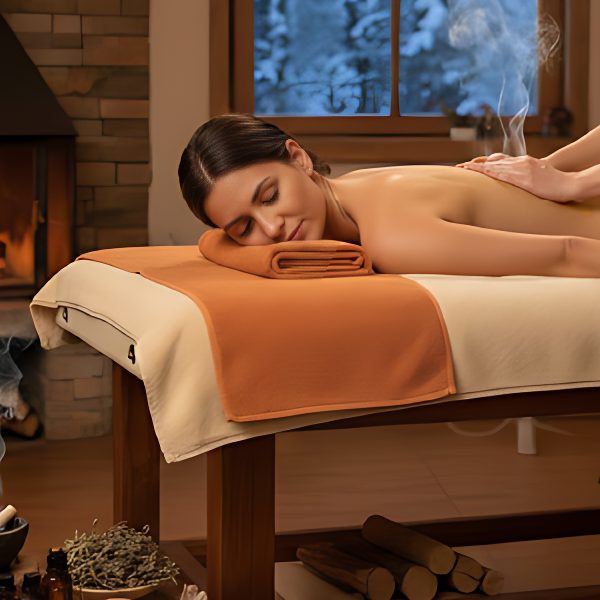
Le massage ayurvédique agit comme un contrepoids direct. Par des mouvements enveloppants et l’application d’huile de sésame chaude, il apporte les qualités opposées : chaleur, onctuosité et stabilité. C’est un véritable ancrage qui permet de traverser la saison froide sans épuisement.
Contenu citables : Selon les principes classiques de l’Ashtanga Hridaya, l’application quotidienne d’huile (Abhyanga) ralentit le vieillissement, réduit la fatigue et renforce la résistance physique face aux agressions environnementales.
2. Un boost naturel pour le système immunitaire
L’hiver met nos défenses naturelles à rude épreuve. Le massage ayurvédique pratiqué chez Tapovan ne se limite pas à la détente musculaire ; il travaille sur les circuits énergétiques (Prana) et le système lymphatique.
En stimulant des points spécifiques appelés “Marmas”, le praticien aide le corps à mieux faire circuler l’énergie vitale. Cette stimulation favorise la production de globules blancs et l’évacuation des déchets métaboliques, rendant l’organisme plus robuste face aux épidémies saisonnières.
3. Combattre la fatigue et le “blues hivernal”
Le manque de luminosité en hiver impacte souvent notre moral et notre niveau d’énergie. Le massage ayurvédique, notamment le Shirodhara (filet d’huile sur le front) ou l’Abhyanga complet, favorise la sécrétion d’endorphines et de sérotonine.
Cette approche holistique permet de réduire le taux de cortisol, l’hormone du stress. En apaisant le système nerveux, le massage améliore également la qualité du sommeil, souvent perturbée par l’agitation de Vata en fin d’année.
Étude de cas :
Une observation clinique menée sur des cures de bien-être montre qu’une série de trois massages ayurvédiques consécutifs réduit de 30% les marqueurs de stress perçu et améliore la sensation de vitalité dès la première semaine de traitement.
4. Hydratation profonde et protection cutanée
Le passage constant du froid extérieur au chauffage intérieur agresse l’épiderme. Les crèmes hydratantes classiques restent souvent en surface. À l’inverse, les huiles de massage ayurvédiques sont choisies pour leur capacité de pénétration.
L’huile de sésame, base de nombreux soins chez Tapovan, traverse les sept couches de la peau (Dhatus) en quelques minutes. Elle nourrit les tissus, assouplit les articulations et redonne de l’éclat au teint qui a tendance à se ternir durant les mois de décembre et janvier.
5. Une détoxification douce pour préparer le printemps
On pense souvent à la détox au printemps, mais elle se prépare dès l’hiver. Le massage ayurvédique aide à liquéfier les toxines (Ama) logées dans les tissus profonds pour les ramener vers le système digestif afin qu’elles soient éliminées.
En recevant un massage régulier durant la saison froide, vous évitez l’accumulation de lourdeur et de congestion qui se manifeste souvent par des allergies ou une fatigue intense au retour des beaux jours.
Conclusion:
Le massage ayurvédique n’est pas un luxe, mais une hygiène de vie nécessaire pour maintenir l’équilibre entre le corps et l’esprit durant la période hivernale. Chez Tapovan, nous perpétuons cette tradition pour vous offrir une protection globale.